
Financial institutions often rely on legacy trading systems that contain valuable, battle-tested business logic. However, these systems are typically difficult to maintain, scale, and innovate upon. A full rewrite is risky and expensive. The solution is a targeted revitalization that preserves core logic while modernizing the underlying architecture.
Our proven methodology uses a data-driven, simulation-first approach combined with AI to de-risk and accelerate this process.
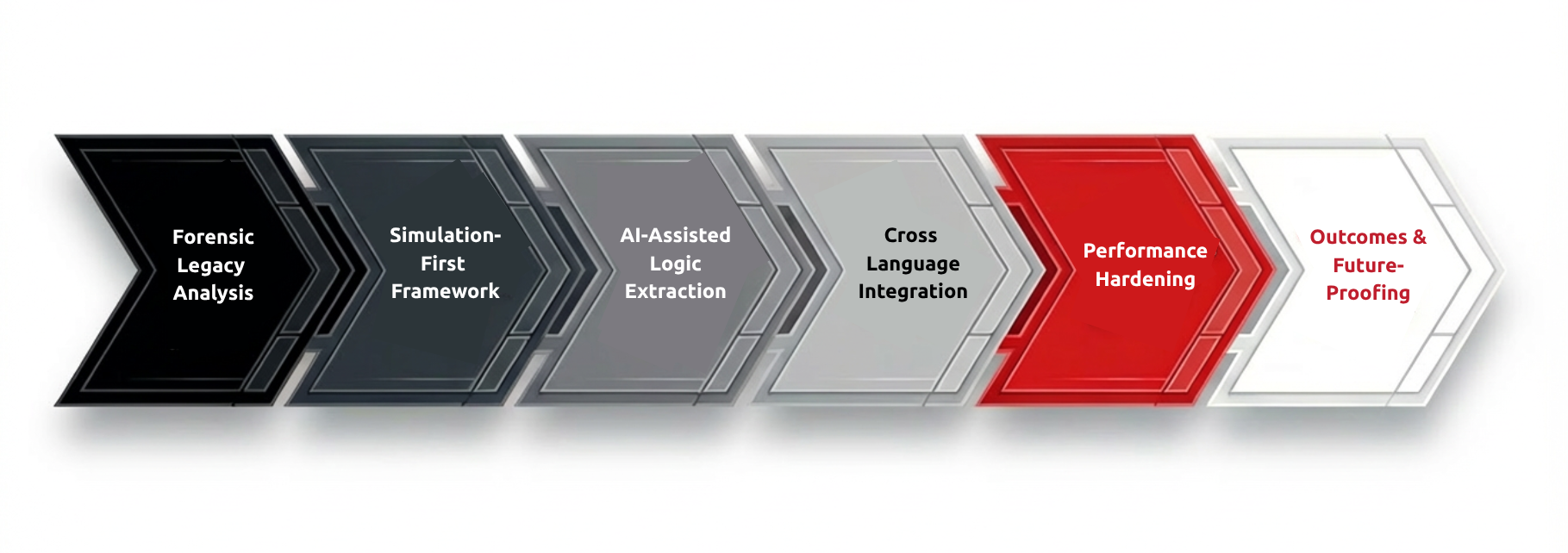
Phase 1: Forensic Legacy Analysis & Client Engagement
- Find Performance Issues: We assess the system’s stability, speed, and operational friction to document its dominant failure scenarios.
- Gather Real-World Data: We work with your stakeholders to get representative production data and usage patterns. This establishes a measurable baseline and clear validation criteria.
- Audit Connections & Infrastructure: We map out dependencies across databases, FIX connectivity, and middleware. This helps us separate the core business logic from the transport and integration layers to pinpoint where modernization will deliver the highest impact.
Phase 2: The Simulation-First Framework
- Categorize Data: We break down captured production data into smaller, correlated streams with clear cause-and-effect relationships. This data engineering step is often the most intensive part of the project.
- Simulate the Environment: We build a simulator that reproduces the real transaction environment, including timing and external system interactions. This allows the legacy system to run as if it were in production, paced by historical data for perfect, repeatable testing.
Phase 3: AI-Assisted Logic Extraction and Translation
- Provide Context to AI: We feed the AI models with relevant business rules, system constraints, and how it connects to other systems. This includes message formats and expected interaction patterns.
- Replace Logic Incrementally: We avoid a “big bang” rewrite by isolating the core decision logic. We then replace only that logic while keeping the surrounding adapters and connections stable. This preserves the simulation environment for continuous validation.
How AI Helps:
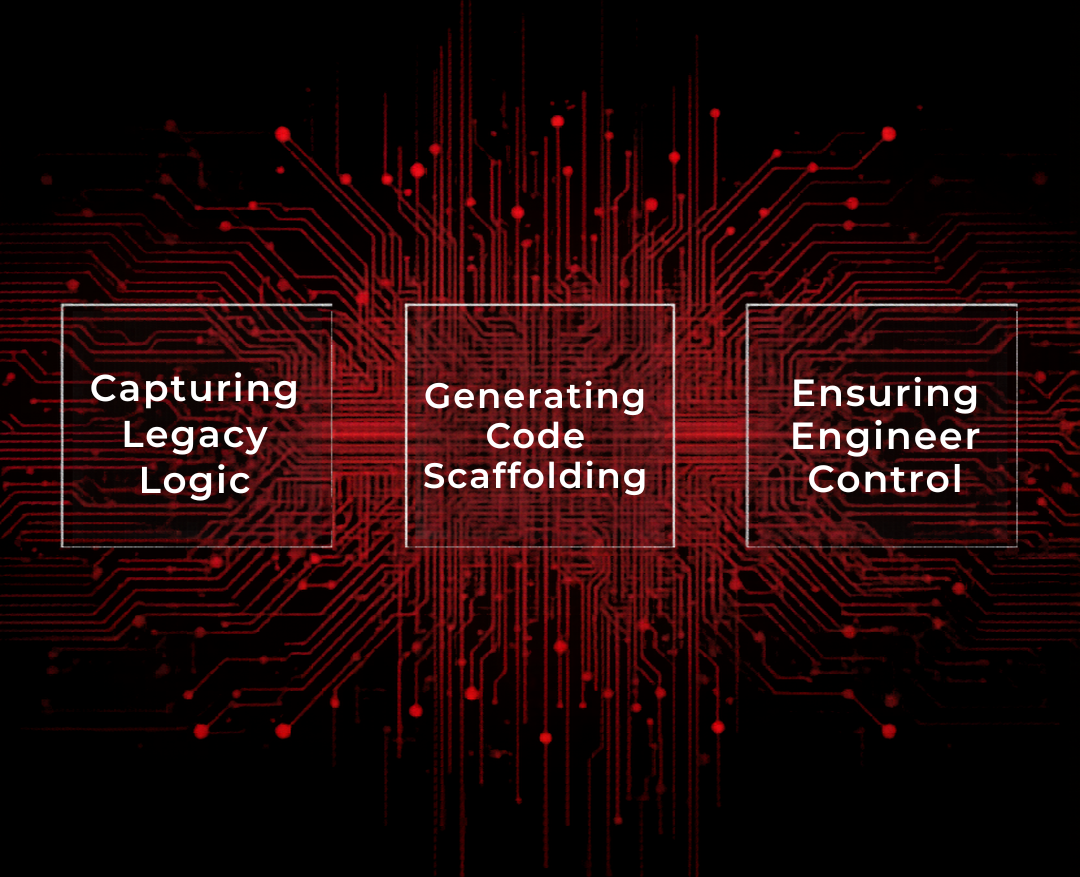
- Capturing Legacy Logic: AI assists in extracting and documenting the existing system behavior, including implicit rules and complex edge cases that are only observed during data replay.
- Generating Code Scaffolding: AI generates the repetitive structural code for the new implementation, such as adapters and “plumbing” needed to connect to the preserved integration contracts.
- Ensuring Engineer Control: This is not an automated process. Our expert engineers maintain full control, reviewing and approving all AI-generated output to ensure correctness, determinism, and adherence to the highest capital markets standards.
Phase 4: Cross-Language Integration & Verification
- Integrate Using Existing Connections: The new logic is connected to the current databases and messaging paths, so external interfaces and operational flows remain stable.
- Reuse the Replay Harness: Historical production data is replayed through the same infrastructure, ensuring the system is tested end-to-end under realistic conditions.
- Automate Output Comparison: We use analysis tools to compare the outputs from the new logic against the original baseline, ensuring they match perfectly.
- Align and Iterate: If any differences appear, we use a combination of AI-assistance and manual debugging to find the gap and rerun the replay until the results are identical.
Phase 5: Integration Modernization and Performance Hardening
- Modernize Connection Points: We upgrade the database access layer, connectivity, and protocol handling while preserving the verified business logic.
- Reduce Latency: We remove unnecessary steps, streamline data paths, and simplify the architecture to improve speed and predictability.
- Harden for Production: We strengthen system monitoring, failure handling, and deployment workflows, making the system easier to operate, troubleshoot, and evolve.
Conclusion
This AI-assisted, simulation-first methodology transforms legacy system modernization from a high-risk gamble into a predictable engineering exercise. By preserving invaluable business logic while jettisoning technical debt, you can unlock innovation, improve performance, and significantly reduce operational risk.
Key Outcomes:
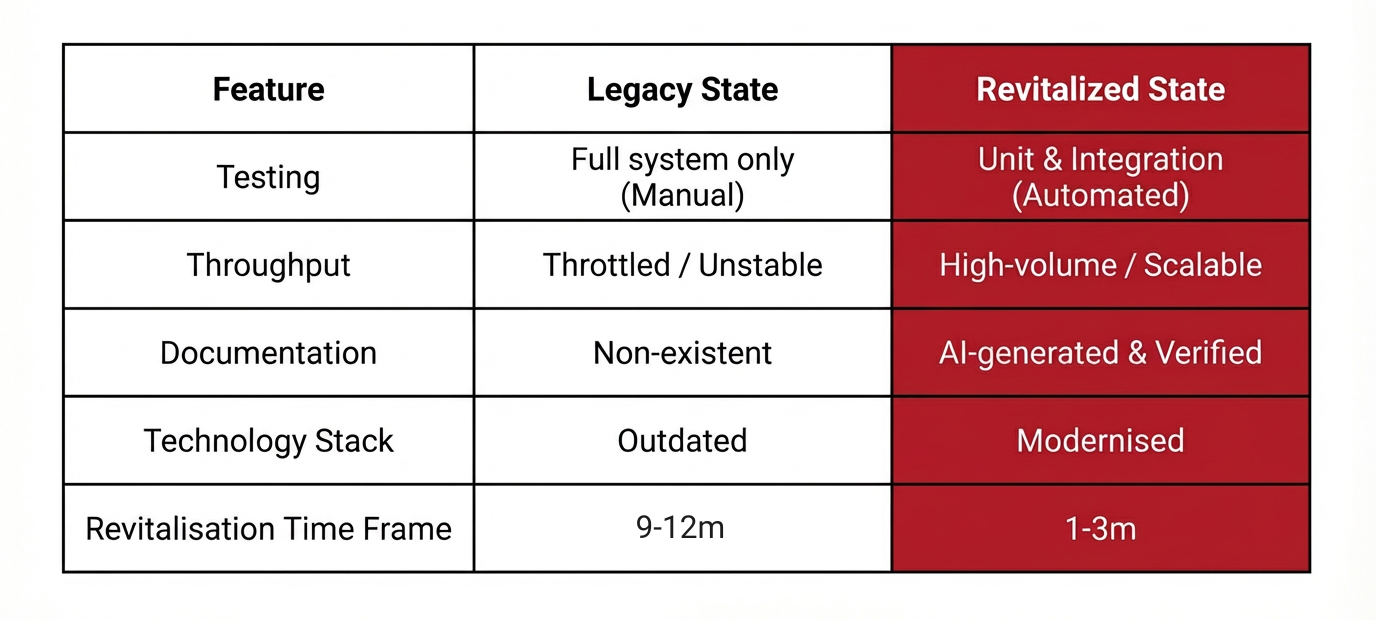
- Time Savings: The initial data engineering and simulation work often compresses what would be a 9 to 12-month manual effort into an accelerated 1 to 3-month modernization cycle.
- Robust Documentation: AI-assisted extraction produces a comprehensive map of system behavior that previously existed only as undocumented institutional knowledge.
- A Modern Foundation: The platform becomes upgradeable, easier to maintain, and is positioned to scale as your business requirements grow.
If you are managing the challenges of a legacy trading platform, our experts are ready to help. Contact us to discuss your specific environment and explore a path to modernization.